March 2026 Highlights and Hot Topics

The March 2026 issue of Highlights and Hot Topics includes a letter from NCCDD’s executive director, an I/DD Legislative Caucus announcement, a public policy update, an introduction to new NCCDD council members, a request for public comment on the Council's new Five-Year Plan, and upcoming NCCDD webinars.
- Letter from the Executive Director
- Make Your Voice Heard: Register for the I/DD Legislative Caucus!
- Public Policy Updates (as of 3/20/26)
- NCCDD Welcomes New Council Members
- Comment on NCCDD’s New Five-Year Plan
- Upcoming NCCDD Webinars in April
- Boletín en español
- Newsletter in Accessible Audio
Letter from the Executive Director
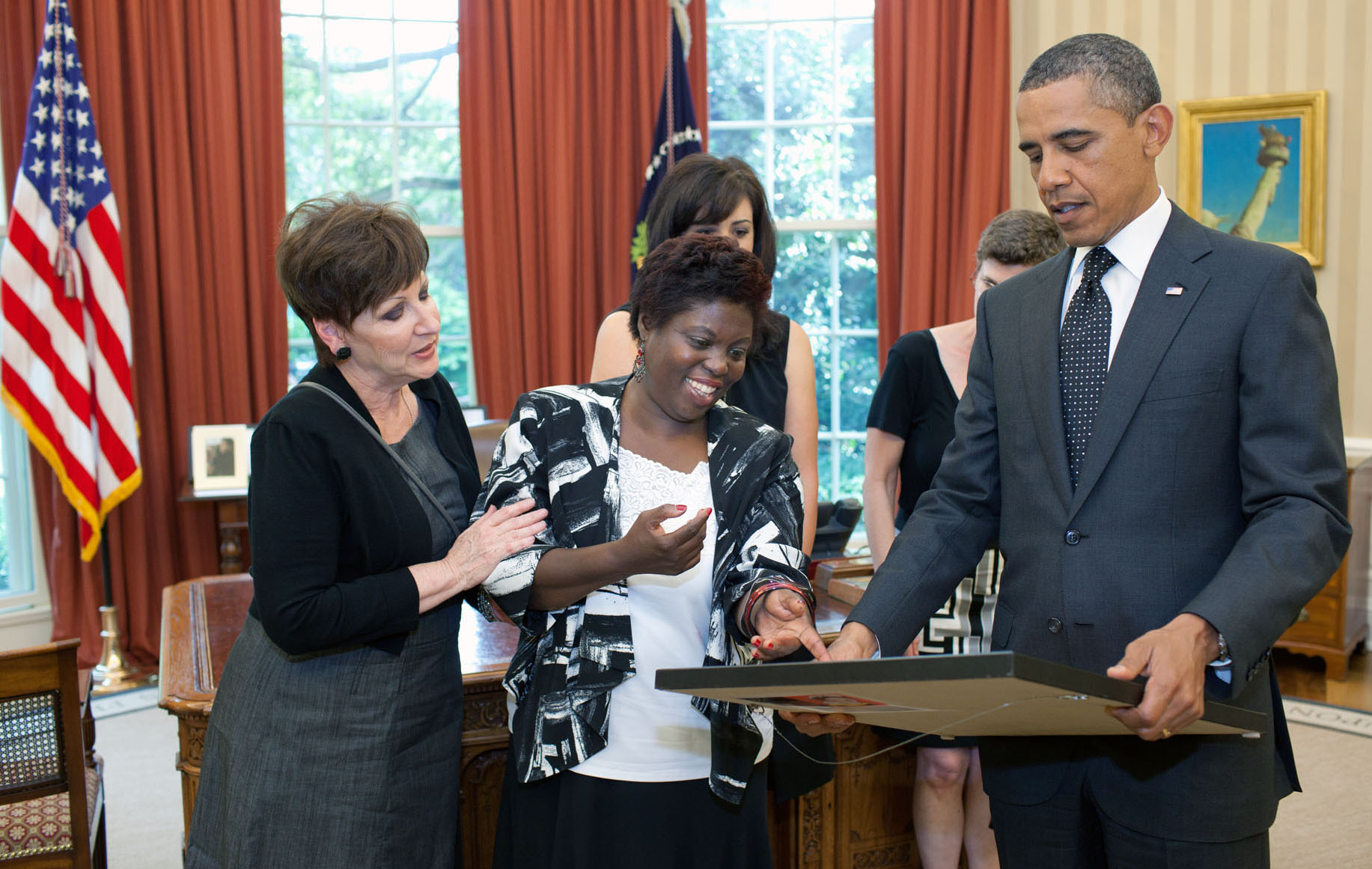 President Barack Obama looks at a painting presented to him by artist Lois Curtis, center, during their meeting in the Oval Office, June 20, 2011. (Official White House Photo by Pete Souza - https://obamawhitehouse.archives.gov/blog/2011/06/22/olmstead-champion-meets-president)
March 17th, 2026 – St. Patrick’s Day – was a fun day! I got to sing “Lean on Me” with Chris Hendricks and friends with intellectual or developmental disabilities (I/DD) at the L’Arche North Carolina Jam Session.
It is Developmental Disability Awareness Month. I could not think of a better way to celebrate this important month than singing and sharing music with people of all different abilities. The music reminded me of all the different ways people with I/DD and friends communicate, play, work, and socialize.
We are preparing for the I/DD Legislative Caucus on April 29th. We will ask individuals with I/DD and family members to speak to legislators about critical issues related to Medicaid funding, the waiting list, and the workforce. I hope that we do more than just speak on that day. I hope we also communicate through music, art, photographs, and other methods.
I was fortunate to be friends with Lois Curtis, who was the plaintiff in the Olmstead case. Lois had been in an institution in Georgia for years. She was a plaintiff in this lawsuit that went all the way to the Supreme Court, arguing she had the right to receive services in the community rather than in an institution. She won!
Lois’s favorite thing to do with her freedom was art. She was an extraordinary artist. We would often ask Lois to speak about the landmark court case she was part of. She would do it, but what she preferred to do was share her art. That was her favorite way to communicate her freedom. She also loved to get paid for her art.
Lois had the opportunity to visit President Barack Obama in 2011 during the Olmstead decision anniversary. There is an amazing picture of Lois sharing her art with President Obama. I am sure President Obama had a lot of meetings that day, but my bet is that when he looked back on that day, it was Lois’s art that he probably remembered the most. Her art sang with her freedom.
As we prepare to go to the General Assembly, I am excited that the day will begin with us singing “Lean on Me” together. I look forward to the creative ways we can share with our leaders the importance of our community during this challenging time.
Talley Wells, NCCDD Executive Director
Make Your Voice Heard: Register for the I/DD Legislative Caucus!
Join lawmakers for a legislative session focused on the needs of individuals and families with intellectual and developmental disabilities (I/DD). The I/DD Caucus will be held on Wednesday, April 29, 2026, from 11 to 1 pm at the Legislative Building. You are also invited to a Welcome Event with L'Arche North Carolina before going to the Capitol. You can participate in both events or attend the one you prefer. Registration is not required, but space will be limited.
This year's Caucus will address key issues involving I/DD supports and services, including the waiting list, the workforce, and funding. Be part of the discussion shaping policies that impact community living, independence, and essential supports.
Participants can schedule meetings with legislators before or after the Caucus. Go to https://www.ncleg.gov/findyourlegislators to reach out to your legislator.
Caucus Agenda
Welcome Event (space is limited!)
Bulla Center with L'Arche North Carolina
301 West Jones Street, Raleigh, NC
8:30 am - 9:00 am: Arrival and Welcome
9:00 am - 9:45 am: Welcome Event
I/DD Legislative Caucus
3rd Floor Auditorium | Legislative Building
16 West Jones Street, Raleigh, NC
11:00 am - 1:00 pm
How to Register
Complete an online form to register
Public Policy Update (as of March 20, 2026)
STATE
Legislative
The official convening date for the “Short Session” will be April 21st. We are still in 2025 extended session mode – the longest Long Session did not produce a State budget.
On March 9th, Governor Stein released a proposed critical needs budget. The budget is for the current fiscal year (FY 2025-2026) and reflects only spending requests for this fiscal year. It does not include any budget pressures from HR1. The Governor called on the General Assembly to pass this to address several critical need areas, including Medicaid rebase, nurse/healthcare rate increases for state facilities, and increases in teachers, law enforcement and other state positions. Read the press release: https://governor.nc.gov/news/press-releases/2026/03/09/governor-stein-proposes-14-billion-critical-needs-budget-keep-north-carolina-strong-including-319
The proposed Medicaid funds ($319 million) would cover the total recurring need to fully fund the state's Medicaid program in FY 2025-2026. Without this additional appropriation, the Division of Health Benefits (DHB) is expected to run out of funding before the end of the fiscal year.
Following the release of this proposed budget, NC House Speaker Destin Hall’s office responded, indicating that they want to see cost controls and guardrails to protect against ‘programs with a history of fraud and abuse.’ They also noted that the House is calling on the Senate to pass increases for teachers and law enforcement that are higher than what the Governor included. Finally, they pointed out that Speaker Hall has publicly committed to ensuring that additional Medicaid funding is provided if necessary to maintain access to care for North Carolinians. The House will continue its work to address these needs when they return for the short session this spring.
Joint Legislative Oversight Committee (LOC) on Medicaid
The Joint LOC on Medicaid met on March 9th with a full agenda, including updates on Medicaid Enrollment/Finances and the Children and Families Specialty Plan (CFSP). Of particular interest to the I/DD community was an update of Research-Based - Behavioral Health Treatment (RB-BHT), which is a service that includes Applied Behavioral Analysis (ABA) treatment for autism. The dramatic increase in utilization of this service has become a concern of the General Assembly and the state. The meeting included presentations with perspectives from NC Department of Health & Human Services, individuals/families, and providers. The providers presented their approach to ensuring individual treatment planning, quality, and adherence to best practice, acknowledging that not all providers follow their approach. It was noted that 47% of the ABA providers in NC do not have other services or presence in NC.
Overall, there seems to be a consensus that change needs to be made to ensure individualized plans, adequate supervision and oversight, adherence to stricter document requirements, and linkage to other supports. NC DHHS shared its commitment to:
- Preserving access to necessary services while improving quality,
- Ensuring that rural regions are not harmed by changes to telehealth,
- Transparency and communication with impacted stakeholders, and
- Minimizing administrative burden for families and providers, while increasing oversight and standardization.
HR 1 Requirements
The Prepaid Health Plans (PHP) HR1 Workgroup continues to meet and plan for the implementation of HR 1. One of the first requirements is the “Qualified Alien” Medicaid Eligibility changes, which must be implemented by October 1, 2026. The changes in eligibility will result in loss of funding for most refugees, asylees, victims of human trafficking, abused spouses and children, Deferred Action for Childhood Arrivals (DACA) recipients, individuals whose deportation is being withheld, or who were granted conditional entry, and individuals who received humanitarian parole. Hospitals and providers will not be able to receive federal Medicaid reimbursement for care provided to these populations.
Three other areas have an implementation date of January 1, 2027. These include the work/community engagement requirements, an increase in frequency of eligibility redetermination, and a shorter time frame for retroactive Medicaid coverage after approval.
These requirements create new rules to navigate and follow for beneficiaries. And place more administrative burden on the state and counties. A potential lapse in coverage due to technical issues may result in inconsistent healthcare treatments and disruption in care.
Department of Health & Human Services (DHHS) Staff Changes
Secretary Sangvai recently announced a reorganization at DHHS. The areas most connected to disability services include:
- Dr. Carrie Brown will serve as Deputy Secretary for Facilities, Behavioral Health & IDD and Chief Psychiatrist. The Division of State Operated Healthcare Facilities (DSOHF) and the Division of Mental Health, Developmental Disabilities, and Substance Use Services (DMH/DD/SUS) will report to her.
- Kelly Crosbie will take on expanded responsibilities as the Assistant Secretary for Mental Health, Developmental Disabilities, and Substance Use Services. In this role, she will continue to lead DMH/DD/SUS as well as oversee housing initiatives in collaboration with housing program leaders across NCDHHS.
- Niki Ashmont will remain as Director of the Division of State Operated Healthcare Facilities (DSOHF).
FEDERAL
Interagency Autism Coordinating Committee (IACC) and the Independent Autism Coordinating Committee (I-ACC)
Earlier this year, Secretary Kennedy appointed a new slate of members for the Interagency Autism Coordinating Committee, or IACC. The IACC is a congressionally mandated panel comprised of government officials and members of the autism community that has set the country’s autism research agenda for the past two decades. None of the 21 members selected had ever previously served on the committee, and many support unproven causes and treatments related to autism. The new membership excludes the overwhelming majority of autistic individuals, families, and advocates who support evidence-based science. The number of self-advocates was reduced from 7 to 3.
In response to this change in members of the IACC, a new group known as the Independent Autism Coordinating Committee, or I-ACC, is being formed. It includes several former members of the federal IACC committee, according to the Autism Science Foundation and the Coalition of Autism Scientists — a group of more than 300 researchers in the field — which are behind the effort. The new group will schedule its meetings to coincide with the government IACC.
Both groups were scheduled to meet on March 19th, but the government IACC abruptly cancelled its meeting.
Education Department
There have been concerns about the Trump administration’s stated intent to dismantle the U.S. Department of Education and the effects of such a move on students with disabilities. Recently, there have been increasing efforts to dismantle the agency with two new agreements to transfer management of education-related programs to other departments. The latest Interagency Agreements (IAAs) will see that the Department of Health and Human Services helps manage programs related to the safety and security of schools, and the Department of State takes over a reporting portal for foreign gifts to institutions of higher education.
The oversight of special education is not included in this most recent shift, and neither is the Office for Civil Rights (OCR), which handles disability discrimination complaints. However, administration officials repeatedly indicate that they intend to move oversight of special education to another agency.
Secretary of Education Linda McMahon and President Donald Trump have said they want to close the Department of Education, but Congress has not shown support for that plan. The recent federal spending package indicated that the Department did not have the authority to transfer its responsibilities to other agencies. The interagency agreements are a way to sidestep lawmakers and begin the dismantling of the agency.
“The language in the recent funding package did not have much ‘teeth,’ so we are not surprised to see more IAAs,” said Robyn Linscott, director of education and family policy at The Arc of the United States. “We still fully anticipate a move of (the Office of Special Education and Rehabilitative Services) out of the Department of Education.”
Trump said last year that the Department of Education would not handle “special needs” and these programs would move to Health and Human Services.
Crack Down on Medicaid and Medicare and Effects on Disability Services
At the end of February, Vice President J.D. Vance, Secretary of Health and Human Services (HHS) Robert F. Kennedy, Jr., and Administrator of the Centers for Medicare & Medicaid Services (CMS) Dr. Mehmet Oz announced new steps to crack down on fraud in Medicare and Medicaid. The actions included deferring $259.5 million of quarterly federal Medicaid funding in Minnesota to prevent payment of questionable claims while further investigation is completed; a nationwide moratorium on Medicare enrollment for certain Durable Medical Equipment, Prosthetics, Orthotics, and Supplies (DMEPOS) suppliers; and a nationwide call to action for Americans to support fraud prevention, including stakeholder input on how CMS can continue to expand and strengthen its efforts.
More recently, CMS is focusing on New York’s Medicaid program. The focus includes services like personal care, home health, non-emergency medical transportation, and behavioral health services. Administrator Oz says that “one of the leading drivers of this high expenditure appears to be related to the workforce delivering long-term care, particularly home-based personal care services.”
This ‘crack down’ aims to reduce fraud – which most people agree with - but risks reducing access to essential Home and Community-Based Services (HCBS) for people with I/DD. The increased scrutiny, in addition to the HR1 changes, may disrupt care for vulnerable beneficiaries. Advocates are concerned that using the language of “fraud-busting” could be a cover for the Administration to cut Medicaid costs and will end up cutting services for people with disabilities and older adults.
NCCDD Welcomes New Council Members
The North Carolina Council on Developmental Disabilities (NCCDD) welcomes two new council members: Lori Ireland and Senator Jim Burgin. Appointed by Governor Josh Stein, Council members are responsible for carrying out the provisions of the Developmental Disabilities Assistance and Bill of Rights Act (DD Act) by ensuring the Council is a member-driven, effective, efficient, and accountable organization. Council members approve NCCDD’s Five Year State Plan and guide all initiatives and contracts of that plan.
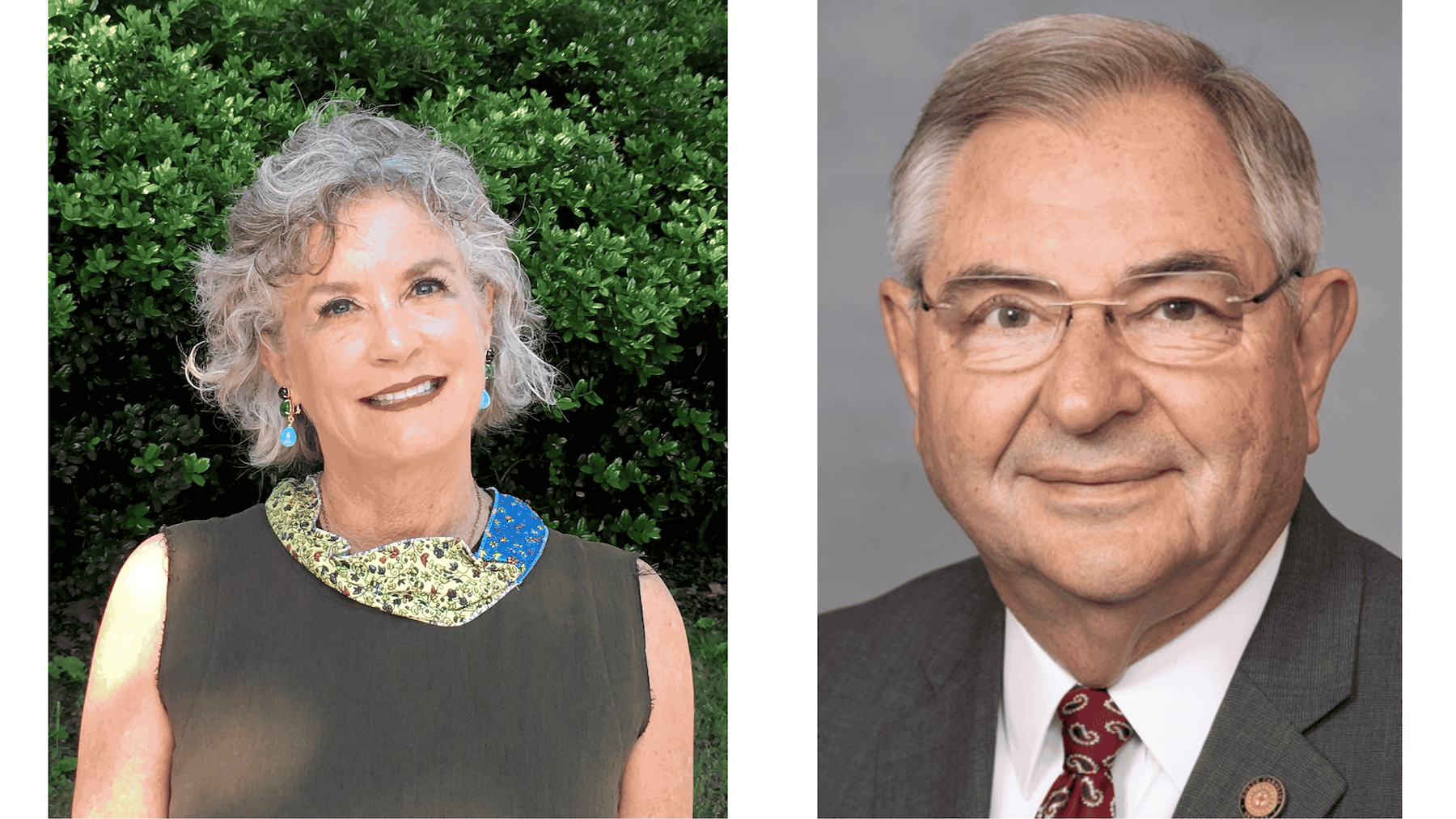
Lori Ireland
Lori Ireland is a mother of four, including a 35-year-old son with profound autism. She has served on the board of several autism-focused organizations, including the National Council on Severe Autism and as Chair of the Autism Society of America. She also leads The Ireland Family Foundation, dedicated to supporting people with profound autism and developmental disabilities. On the Council, she aims to be a strong voice for individuals who are profoundly affected, with a focus on expanding housing options, while continuing to strengthen her advocacy skills.
Senator Jim Burgin
State Senator Jim Burgin has been serving District 12 (Harnett, Lee, and Sampson counties) since the 2018 elections. During the 2025-2026 legislative session, he served on several committees, including chairperson for the Appropriations on Health and Human Services Committee and the Health Care Committee. Burgin is also president and owner of C&D Insurance and previously served two terms on the Harnett County Board of Commissioners. His appointment to the Council is at the pleasure of the governor.
Comment on NCCDD’s New Five-Year Plan
The North Carolina Council on Developmental Disabilities (NCCDD) is accepting public input on the Council's next Five-Year State Plan Goals and Objectives. Your input helps NCCDD ensure its initiatives serve the needs of North Carolina’s intellectual and developmental disabilities (I/DD) community.
Public comments will be accepted through Thursday, April 16, 2026.
Upcoming NCCDD Webinars in April
The North Carolina Council on Developmental Disabilities (NCCDD) offers several monthly webinars to help you stay educated and informed. All meetings are free and open to the public. Stay informed and become involved in important conversations – there’s something for everyone in the I/DD community!
Policy Education Meeting
Thursday, April 9, 2026, from 10:30 AM to Noon
Learn about important updates about state and federal policies, budget developments, and other issues that affect people with intellectual and developmental disabilities (I/DD). There will also be time for questions and open discussion. Please note that NCCDD only provides public policy education. The Council does not lobby on specific legislation.
Register here: https://www.zoomgov.com/meeting/register/vJItdu-uqD8oHpxzFX9FiES_lSmk_8OP4r4#/registration
Self-Advocate Discussion Series
Topic: Coordinated Advocacy
Wednesday, April 15, 2026, from 1 - 2 PM
Coordinated advocacy is where relationships and advocacy come together. Join us to hear about advocacy experiences and efforts by the disability community. Come share a story about your advocacy experience. We’ll discuss different types of advocacy, like the in-person/face-to-face, behind-the-scenes, letter writing, and more. Spend an hour with us and learn about and share coordinated advocacy. Sign up and let your voice be heard!
Note: Please register at least one week before the session.
To register: https://www.zoomgov.com/meeting/register/GwJ-kZReQ7G4Joz9GYr_6g#/registration
Learn more about his webinar series: https://nccdd.org/get-involved/self-advocate-discussion-series
The Council Presents
Topic: ABLE Accounts: Save Money Without Losing Benefits
Thursday, April 23, 2026, from 1 - 2 PM
Christine Farrelly from the NC Department of State Treasury will talk about ABLE accounts. ABLE accounts are special savings and investment accounts for people with disabilities. They allow you to save money without losing benefits like Medicaid or SSI. During this session, you will learn who can open an ABLE account, how the accounts work, and why they can be helpful. You will also learn how to use this money-saving option, which many people with disabilities may not know about.
To register: https://www.zoomgov.com/meeting/register/JTEBPG47SW2g2Z9fVyH0PQ#/registration
Learn more about this webinar series: https://nccdd.org/get-involved/nc-council-presents
Boletín en español
Lea el boletín aquí: Aspectos destacados & temas de marzo de 2026
Newsletter in Accessible Audio
Listen to the audio version: https://www.buzzsprout.com/2526321/episodes/18895175