September 2026 Highlights and Hot Topics

In the September issue of Highlights & Hot Topics, read stories from advocates about their daily lives and accomplishments, catch up on the latest in public policy changes, find out how to share cool things happening where you live, and register for upcoming webinars hosted by NCCDD. The newsletter is also available in Spanish and accessible audio.
- A Partnership That Makes Independence Possible
- Making Rights Easier to Understand: SARTAC Fellow Laura Newell
- Public Policy Updates as of September 22, 2026
- Share Something Cool from Where You Live!
- Upcoming NCCDD Webinars in October
- Boletín en español
- Newsletter in Accessible Audio
A Partnership That Makes Independence Possible
NCCDD Council member Kay McMillan and Direct Support Professional (DSP) Michelle McWilliams have worked side-by-side for nearly 10 years. Their relationship is built on trust and a shared belief that support should help people direct their own lives.
In honor of DSP Appreciation Week, held September 13–19, 2026, they reflect on what this work makes possible and what must change to keep dedicated DSPs in the field.
During DSP Appreciation Week (and throughout the whole year), NCCDD recognizes the entire DSP workforce for the essential support they provide.
10 Years of Working and Learning Together
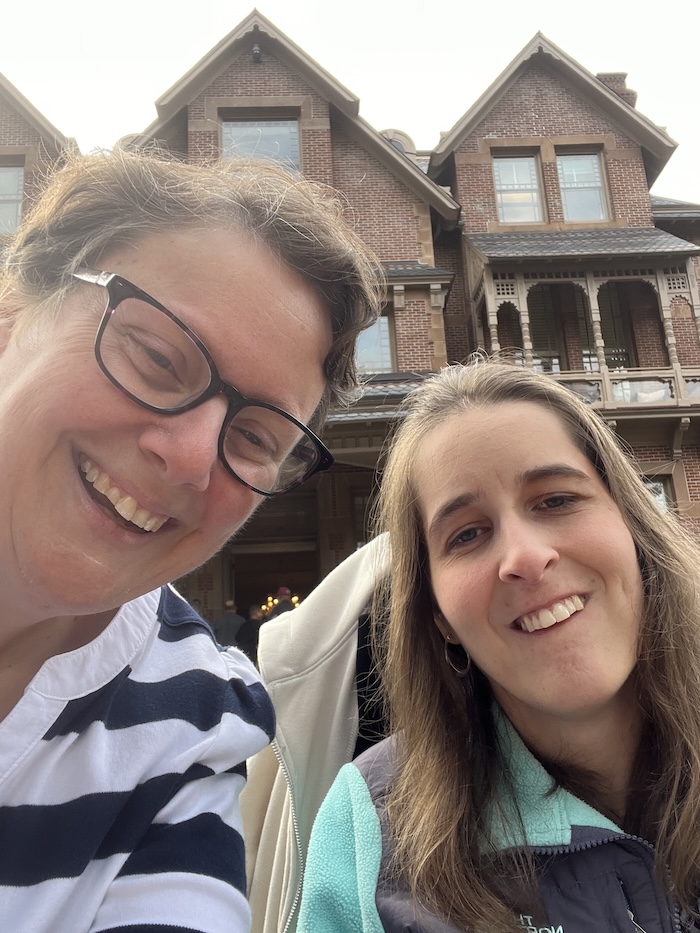 Kay: I’m Kay McMillan. I’ve lived in Raleigh my whole life, I’m 31-years-old, and I live a typical 31-year-old’s life. I have a job, and I have close friends that I love to spend time with.
I also have cerebral palsy, so I need help with all daily living activities. But needing support doesn’t mean giving up control.
My motto about independent living is that it’s not about doing it yourself, but about being in control of what’s being done and your life. I might need physical help, but I am directing my life and how people help me.
Michelle: My name is Michelle McWilliams, and I’ve been in North Carolina since 1998. I’m in my early 50s, and I’ve been working with individuals with disabilities for 28 years.
I’m a caregiver through and through. I really enjoy helping people – I’m not sure exactly where that came from; it’s just always been a part of who I am.
Kay and I just started our 10th year working together. We spend a lot of time together. In February, we logged 294 hours together. And we actually just broke that record. Last month, we spent 310 hours together.
Independence, Friendship and Fun!
Kay: I’m Co-Founder and Director of the nonprofit Youth LEAD NC. My job requires me to take Zoom meetings, write emails, go to in-person meetings, and travel for work trips. Michelle provides the physical help I need, so I’m able to make decisions and carry my work forward.
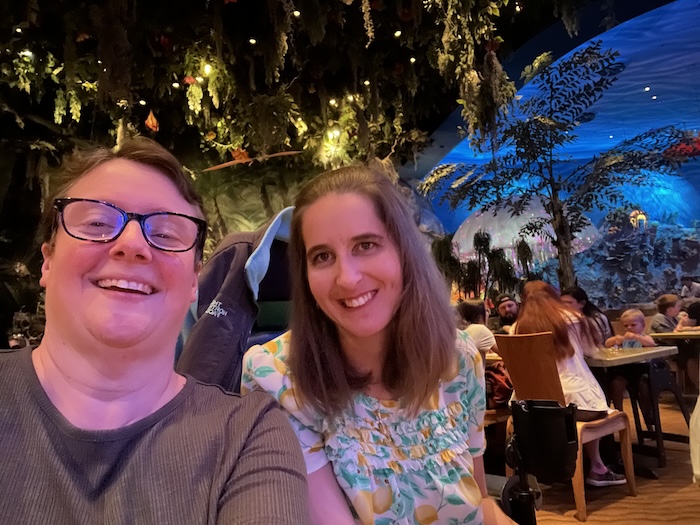 When you spend that many hours together, you do end up building a bond. At least that’s how it’s been for us.
Michelle: Something I love about my job is that it’s always different, and I never know what to expect. Once, I flew with Kay to Austin when she was the keynote speaker at an assistive technology conference. I hadn’t ever flown before. I never thought work would take me there.
Being a DSP is a mindset. Kay and I are friends. We laugh a lot, and Kay never asks me to do anything hard. Well, except for doing her hair and makeup!
Supporting Those Who Support Others
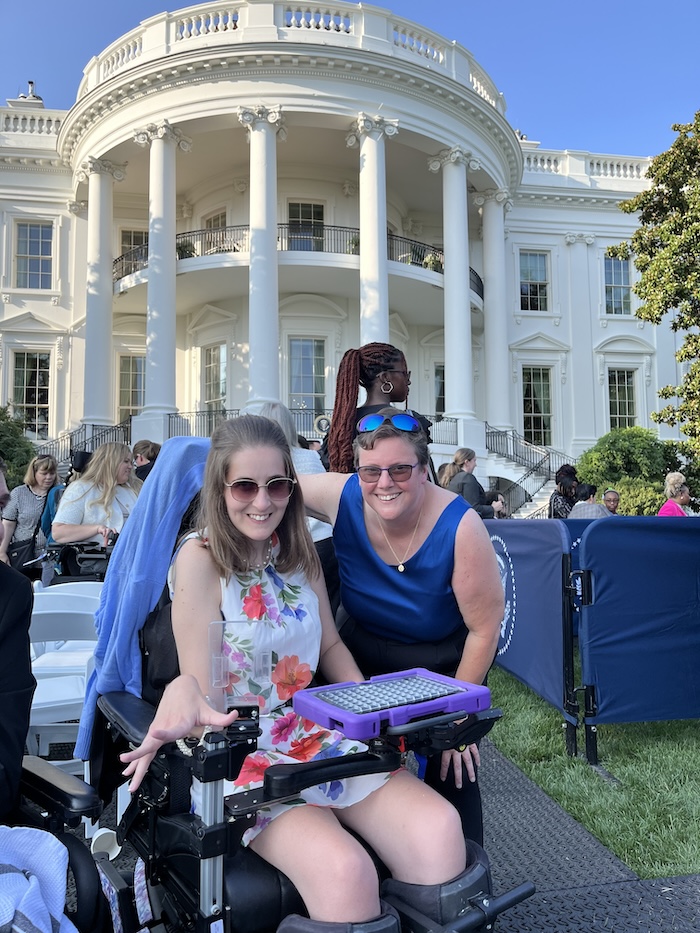 Kay: Being a DSP is an extremely important job. It’s much more important than taking care of someone’s basic needs. It’s helping them live a productive life and the life they want to lead.
I want to help people recognize the value of this work. DSPs carry a lot of responsibility and should be paid accordingly. When good DSPs leave, people with disabilities lose consistency and access to their everyday lives.
Michelle: I agree with being paid accordingly. DSPs also need better training that prepares them for the realities of the job. Things like helping someone through a crisis or respecting how someone communicates and makes their own decisions.
There are natural caregivers who want to do this work and do it well. We need to give them the training and support to make it a lasting career.
Making Rights Easier to Understand: SARTAC Fellow Laura Newell
 Laura Newell is using her experience as a self-advocate to help other people with intellectual or developmental disabilities (I/DD) better understand their rights.
Laura is one of six people selected as a 2026 SARTAC Fellow. SARTAC, the Self Advocacy Resource and Technical Assistance Center, offers a nine-month fellowship for people with I/DD to lead self-advocacy projects. Each fellow chooses an important leadership or policy document or topic and creates information that is easier for others to understand.
Laura’s project is a plain language customer rights book. The book will help people with I/DD learn about their rights related to guardianship and alternatives to guardianship. It will use pictures, photographs and artwork along with easy-to-understand information.
The goal is to help people with I/DD understand their rights and have the information they need to speak up for themselves. Laura also hopes people will use the book to educate their guardians about the rights of people with disabilities.
“I like to teach adults with disabilities about their rights, educate and empower them, and change the community,” Laura said. “I also like to write books and travel. I like going out to eat with my friends. I like to read!”
A Long History of Advocacy
Laura has been advocating for people with disabilities for many years. In November 1998, she founded Self-Advocates of Mecklenburg, a group of adults with I/DD who work together to create change in their community.
The group has advocated with Charlotte Transit to add bus stops and keep existing stops from being discontinued. Members have also advocated with North Carolina legislators for funding for disability services and higher wages for direct support professionals (DSPs).
Today, Laura continues to advocate on issues that affect people with disabilities. She and other self-advocates are working to end the SSI marriage penalty. They took a trip to Washington, D.C. in September to meet with members of Congress about the issue.
Laura’s SARTAC project is another way she is helping people with I/DD understand their rights and become stronger self-advocates.
Sharing Her Work
On August 20, 2026, Laura presented her project as part of a SARTAC meeting. Her project is called “Plain Language Project Reports from the SARTAC Fellows – Our Rights Are Human Rights.” She shared her work with other self-advocates and talked about the importance of making information easier to understand.
NCCDD is Laura’s host organization for the fellowship. As part of the fellowship, NCCDD staff Talley Wells and Chris Hendricks conducted a focus group with Laura to help guide her project.
SARTAC Fellows work on their projects about six hours each week. Fellows receive $5,000 for completing their projects and participate in monthly calls to share updates and learn from one another. At the end of the fellowship, each fellow presents their work to self-advocates from across the country.
Laura’s project shows how plain language can help make important information about rights more accessible. It also demonstrates the important role people with I/DD can play in creating resources for their own communities.
To learn more about the SARTAC Fellowship, visit SARTAC Fellows.
Public Policy Update (as of September 22, 2026)
Read a summary of recent federal and state policy updates that may affect or interest North Carolinians with intellectual and other developmental disabilities (I/DD). This update, published September 22, 2026, highlights key developments related to the I/DD community.
FEDERAL
Congress
Congress has recently returned from an August recess. Before the break, the House and Senate each passed continuing resolutions to keep the federal government open past September, as we near the end of the fiscal year without a budget approved for the coming year. The two bills were not exactly the same, so we are expecting work on reconciling the differences when they return.
On August 31, 2026, the House returned and quickly voted on the Senate version of the continuing resolution (CR) extending funding for federal programs and services through December 11, 2026. The bill was sent to the president and was signed. Congress now has until December 11, 2026, to approve a budget for the 2026-2027 fiscal year.
In addition to extending federal funding, the CR includes language delaying the implementation of a proposed rule from the Office of Management and Budget (OMB) that would reshape and politicize the federal grantmaking process. Advocates have been concerned about the effects of these changes on grants that impact people with intellectual or other developmental disabilities (I/DD). This delay is temporary and will need to be addressed as the spending bills and other legislation are worked out.
With a CR in place, Congress is scheduled for another recess in October in the run-up to the November elections. Members of the House left on September 16, 2026, and Senate members are expected to leave by the end of September. Given the short timeframe and quickly approaching midterm elections, no major legislation has been taken up. Senate members have focused on confirming federal judges during this time.
The House and Senate are expected to return on November 9, 2026. Between November 9th and December 11th, lawmakers will need to either pass all 12 remaining FY27 spending bills for federal programs, enact another CR to temporarily extend funding for federal programs again, or risk a government shutdown. The path Congress pursues moving forward may depend on whether control of the House or Senate changes hands after the election. For example, Congress might pass all 12 FY27 spending bills before the year ends to give the incoming Congress a “clean slate” to start their work, but if control of both the House and Senate flip, lawmakers may hold off on finalizing FY27 spending bills to give the new Congress the opportunity to rewrite the spending bills in the new year.
Department of Education
Earlier in September, the U.S. Department of Education’s secretary for the Office of Special Education and Rehabilitation Services (OSERS), Kelly Rogers, unexpectedly resigned. This happened during the same week that the Education Department began moving staff to different departments. These moves are a result of interagency agreements announced in June that transfer many special education functions to other agencies. The health agency and certain civil rights work were transferred to the Justice Department. One hundred OSERS staffers have been moved to the Department of Health and Human Services, and 57 employees in the Education Department’s Office for Civil Rights have been relocated to the Department of Justice.
The administration has stated that these moves will reduce bureaucracy. Advocates have said it will create confusion and more complexity as schools and families will need to go to multiple agencies for guidance, funding, and questions about regulations. There has been some interest in Congress to introduce legislation to halt these changes. Continued advocacy around the consequences of these moves is needed.
Threats to Community Integration for People with Disabilities
We previously reported that the Justice Department’s Office of Legal Counsel issued a statement in June stating that neither the Americans with Disabilities Act nor Section 504 of the Rehabilitation Act “require states to treat mentally disabled patients in the most integrated setting appropriate to their needs.” Even the memo noted that its position “is out of step with the common understanding” in the federal courts of Olmstead v. L.C., a landmark 1999 Supreme Court decision on the rights of people with disabilities to access services in the community.
Now the Department of Justice is citing this memo and is attempting to do away with rules requiring that people with disabilities be served in the community.
The U.S. Department of Justice alongside Texas, Alaska, Florida, Louisiana and Montana want to drop all references to the phrase “most integrated setting” in the U.S. Department of Health and Human Services’ regulations related to Section 504 of the Rehabilitation Act. Instead of defending the rights of people with disabilities, it appears that they are switching sides.
As we have noted before, even if the wording about community integration is removed from the Section 504 regulations, the law itself has not changed. Only Congress can change the law. But people with disabilities may feel the effects of the federal government refusing to enforce the law. At the state level, it is imperative that we continue to educate and advocate to ensure that people with disabilities maintain the right to live in the community.
STATE
Response to Department of Justice Actions Related to Olmstead
In response to the actions at the federal level, Governor Stein, along with 17 other governors, sent a letter to the US Department of Justice opposing federal actions that weaken protections or lessen the rights of people with disabilities to live in integrated settings as established by Olmstead. They emphasized that we cannot reverse the progress that has been made in ensuring people with disabilities have choices about where and how they live.
From the letter to AG:
Recent actions have already created significant uncertainty for states and for the workforce of dedicated individuals who support people with disabilities throughout the country. More importantly, people with disabilities and their families are terrified about moving backwards - or worse - becoming institutionalized against their will - after decades of advocacy. We simply cannot risk reversing the progress this country has made in ensuring Americans with disabilities have meaningful choices about where and how they live their lives.
We strongly oppose any federal actions that would weaken protections against unnecessary segregation or diminish the right of people with disabilities to receive services in the most integrated settings appropriate to meet their needs, consistent with established Olmstead precedent. Community integration is not an abstract legal concept. It means having a home, being able to work, attend school, shop, worship, build relationships, and participate in an ordinary civic life.
Transition to Community Living Settlement Agreement
On September 11, 2026, North Carolina and the US Department of Justice filed a motion asking a federal district court to end its oversight of the Transitions to Community Living (TCL) settlement agreement. TCL is a program designed to move adults with serious mental illnesses out of institutional settings like adult care homes and into community housing settings with services and supports, if they choose. For the last 14 years, the program has been under the oversight of the federal court. Disability advocates and independent reviewers point out that the state has not met every major requirement under the agreement, leading to debate over future accountability. State officials note that the program has helped over 4,150 individuals with serious mental illnesses move into community-integrated housing and diverted roughly 6,700 people from adult care homes. North Carolina Department of Health and Human Services (NCDHHS) Secretary Dev Sangvai stated that state support for housing, crisis response, peer support, and employment services will remain a priority despite the end of federal oversight.
New Assessment Tool for 1915(i)
NC Medicaid has released Version 3.0 of the 1915(i) Assessment Tool and a new companion guide, which becomes mandatory starting October 1, 2026, for all new 1915(i) service requests and reassessments. One change is that eligibility and Care Plan timeframes will not align with the participant’s birth month. This is a welcome change that should simplify the process. The strict eligibility end date has been removed to prevent shortening a member's full eligibility period unexpectedly. There is a new Companion Guide that provides specific instructions for care managers and providers on how to complete the form. The step-by-step guidance and specific scoring definitions are intended to reduce subjectivity and improve accuracy. NCDHHS has provided mandatory training webinars and office hours to ensure care management staff are proficient before the October 1, 2026 implementation.
 Share Something Cool from Where You Live!
What’s something fun that's happening in your community for people with intellectual or developmental disabilities (I/DD)? We are looking for resources like book clubs, social groups, meetups, programs, and other community resources to support people with I/DD to share with others!
Send us your suggestions by completing an online form. We will review your submission – it could be featured in an upcoming Highlights & Hot Topics newsletter!
Upcoming NCCDD Webinars in October
The North Carolina Council on Developmental Disabilities (NCCDD) offers several monthly webinars to help you stay educated and informed. All meetings are free and open to the public. Stay informed and become involved in important conversations – there’s something for everyone in the I/DD community!
Policy Education Meeting
Thursday, October 8, 2026, from 10:30 AM to Noon
Learn about important updates about state and federal policies, budget developments, and other issues that affect people with intellectual and developmental disabilities (I/DD). There will also be time for questions and open discussion. Please note that NCCDD only provides public policy education. The Council does not lobby on specific legislation.
Register here: https://www.zoomgov.com/meeting/register/vJItdu-uqD8oHpxzFX9FiES_lSmk_8OP4r4#/registration
Self-Advocate Discussion Series
Topic: Getting Active in Advocacy: ALP-NC Alumni Network
Wednesday, October 21, 2026, from 1 - 2 PM
Join us to get ready to celebrate, learn, and share. In October 2026, National Disability Employment Awareness Month (NDEAM) will have its 81st anniversary! This month honors the important contributions people with disabilities make at work and reminds us that progress happens step by step, even during times of change. NDEAM is led each year in October by the U.S. Department of Labor’s Office of Disability Employment Policy. During this session, we will share stories and ideas to celebrate this important month.
Note: Please register at least one week before the session.
To register: https://www.zoomgov.com/meeting/register/GwJ-kZReQ7G4Joz9GYr_6g#/registration
Learn more about this webinar series: https://nccdd.org/get-involved/self-advocate-discussion-series
The Council Presents
Topic: NCCDD Five-Year State Plan
Thursday, October 22, 2026, from 1 - 2 PM
NCCDD staff and members will present the Council’s 2027-3031 Five-Year State Plan. The Five-Year State Plan sets the Council’s priorities and guides how funding is invested to improve services, supports, and opportunities for people with intellectual and developmental disabilities (I/DD) across North Carolina. The plan was developed with extensive public input from North Carolinians concerned with intellectual or developmental disabilities (I/DD) to help ensure that the plan reflects the needs and lived experiences of the I/DD community. The plan went into effect on October 1, 2026. Join us and learn about future Council investments and how North Carolinians concerned with I/DD contributed to how the Council will invest its funds for the next five years.
To register: https://www.zoomgov.com/meeting/register/JTEBPG47SW2g2Z9fVyH0PQ#/registration
Learn more about this webinar series: https://nccdd.org/get-involved/nc-council-presents
Boletín en español
Lea el boletín aquí: Aspectos destacados & temas de interés de septiembre de 2026