August 2026 Highlights and Hot Topics

In the August issue of Highlights & Hot Topics, read a message from NCCDD’s executive director, learn about one of NCCDD’s Council members, and catch up on the latest in public policy. You'll also discover cool things you should know about, registration information for upcoming webinars hosted by NCCDD, and links to Spanish or accessible audio versions of this newsletter.
- Letter from the Executive Director
- Council Member Shares Her Advocacy Journey
- Public Policy Updates (as of 8/18/26)
- Cool Things You Should Know About!
- Upcoming NCCDD Webinars in September
- Boletín en español
- Newsletter in Accessible Audio
Letter from the Executive Director

Let’s talk technology and innovation!
We are going to need it. We have a workforce shortage for direct support professionals, nurses, and other critical paid caregivers.
This shortage is likely to only grow, despite all of our advocacy, because our aging and disability population is growing fast. In fact, we anticipate the number of people over age 85 in North Carolina to double from our 2021 population to what it will be in 2041. The number of people over age 65 is expected to increase from 1.8 million to over 2.7 million in the same period.
This means technology has to be a big part of our strategy for meeting our needs going forward. The good news is that there is a lot of innovation happening from smartphones to driverless cars to artificial intelligence.
Some of this is scary and dangerous, but much of it is also hopeful and transformative.
Take the smartphone. One commentator has called it the “Swiss Army [knife] of technology.” It can screen read, caption, magnify, and amplify. It has voice control, smart reminders, and eye tracking. And that’s just the start. A friend with a disability, who has little movement below the neck, told me recently that the smartphone opened worlds to him.
I recently did a presentation for the Georgia ADA Conference on how accommodations can be beneficial for many of us, whether or not we have disabilities. Think of how the curb cut enables people who use wheelchairs to safely leave a sidewalk, but it is also useful for grocery carts, baby strollers, suitcases, and bicycles. This is called the “curb cut effect,” and technology is a curb cut effect multiplier.
In my presentation, I outlined many of the new technologies that are revolutionizing the world for people with disabilities.
- Artificial intelligence through MaaS-BridgePlatform is using cameras and crowdsourcing to share where temporary barriers may make using public transportation difficult for people with disabilities.
- Personalized speech recognition is enabling people with asynchronous vocal patterns (speaking with a different rhythm or pace) to use technology that is trained on individual voices.
- Eye tracking allows users who have limited movement to control computers and virtual reality headsets.
- Remote technology is enabling people with intellectual and developmental disabilities to live more independently.
- Self-driving cars will offer independence to hundreds of thousands of people who do not drive.
You can learn a lot more about how technology can offer supports at the North Carolina Assistive Technology Expo on September 17, 2026 in Raleigh. Also, I am excited that the North Carolina Council on Developmental Disabilities is working on a Request for Applications on technology and remote supports that we hope to release later in the year.
The future will have a lot of challenges, but technology will help!
Talley Wells, NCCDD Executive Director
Council Member Shares Her Advocacy Journey
When Olivia-Rose Scott was encouraged to apply for the North Carolina Council on Developmental Disabilities (NCCDD), she wondered if she had enough experience. “You think I’m good enough to do that?” she remembered asking.
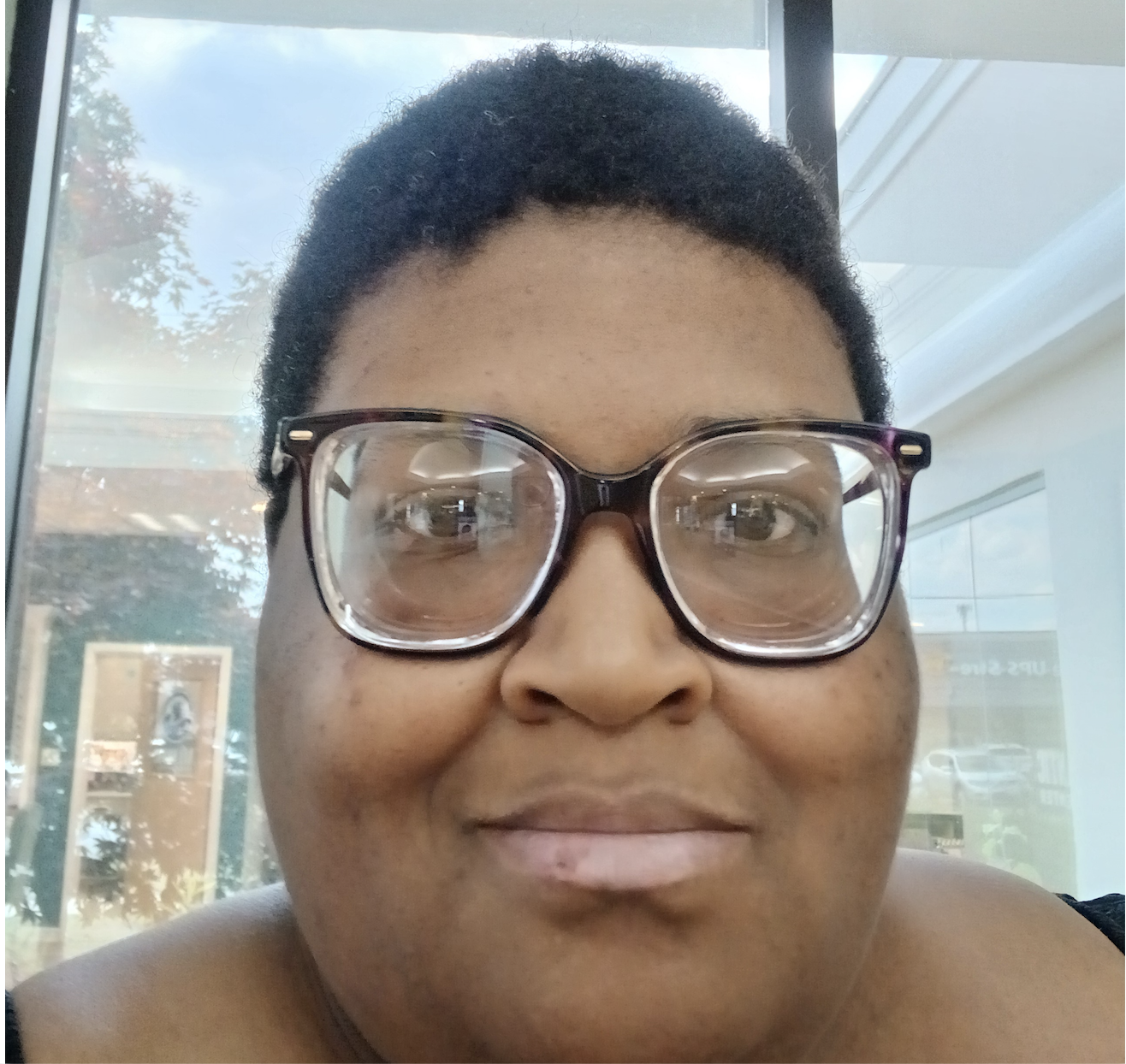 Scott, from Goldsboro, North Carolina, had spent about three years speaking up for people with intellectual and other developmental disabilities (I/DD). During that time, she developed strong advocacy skills as a writer, speaker, and peer mentor. In 2024, she was appointed by the Governor to the North Carolina Council on Developmental Disabilities (NCCDD). She currently serves on NCCDD’s Advocacy Development Committee.
Her path to the Council reflects an attitude she brings to her advocacy: “You might be told no; that’s just how things go.”
Scott is 35 and has lived with autism her entire life, but she spent her first 30 years without knowing she was autistic. “I was likely diagnosed as a child, but my parents didn’t tell me,” she said. “When I found out, I was rightfully upset. But it just spurred me to do more advocacy.”
One of her first steps in advocacy was joining the I/DD Peer Mentor Training Pilot. The NCCDD-funded program trains adults with I/DD to use their experiences with Medicaid to help others understand the system. Scott became a certified peer support specialist and worked in mental health services at Alliance Health.
As she gained experience, she began to see how her skills could help create broader change. “The more advocacy I did, the more I felt like I’ve got all these talents—reading, writing, speaking—so I doubled down on being an advocate,” Scott said.
Her work grew to include writing to members of Congress and speaking up about gaps in systems that affect people with disabilities. She completed the Ability Leadership Program of North Carolina (ALP-NC), a peer-led program that helps disability advocates build their leadership skills. After graduating from the program in 2024, she became an NCCDD Council member and has served on the Council for the last two years.
Now, Scott is continuing her advocacy training through the Leadership Education in Neurodevelopmental and Related Disabilities (LEND) Fellowship. The program is based at the Carolina Institute for Developmental Disabilities (CIND) at the University of North Carolina at Chapel Hill. It prepares participants to lead change in health care, community services, research, and advocacy.
Scott’s training will last for a full academic year. Her cohort includes graduate and doctoral students, self-advocates, and family advocates from health, education, and disability-related fields. Fellows bring together professional knowledge and lived experience to study how services and systems can better support people with disabilities and their families.
Scott was drawn to the chance to learn with people who understand and approach disability in different ways. “My cohort has folks studying to be physical therapists, audiologists, dentists, social workers, and advocates,” she said. She hopes the experience will prepare her to advocate in more academic spaces. “I’ll learn things across a lot of different disciplines. I want to be able to apply that to my life and the people I hope to support one day.”
As part of her LEND fellowship, Scott will complete a final project. She is considering a project about disability and religion. Her own relationship with religion has changed throughout her life, and she has found that disability is often left out of conversations in religious spaces.
“I consider myself religious, and it’s been a journey,” she said. “I want to know how I can apply the Bible to my life. It’s not been an easy life, so what does the Bible have to say about lives like mine?”
Scott does not yet know where that question will lead. But advocacy often begins without a clear answer. It starts with asking difficult questions. Scott’s path shows that advocates do not need to know everything before they begin. They need to trust that their experiences matter, learn from people whose experiences differ from their own, and be willing to rethink what is possible.
Public Policy Update (as of August 18, 2026)
Read a summary of recent public policy updates that may be of interest to North Carolinians with intellectual and other developmental disabilities (I/DD). This update is from August 18, 2026, and covers updates from the federal and state level on public policy that is of interest to the intellectual and developmental disabilities community.
FEDERAL
Budget
The federal budget process stalled after the House passed only three appropriations bills out of the 12 that came out of committees. And on the Senate side, there was no progress on the budget due to no agreement on the total budget number. To avoid a government shutdown at the end of September, both the House and Senate passed measures to extend the current budget into December. The week of July 20th, the House passed a stopgap measure that would fund federal agencies at existing levels through December 4, 2026. It was unclear whether the Senate would move on this before recess, but in early August the Senate passed its own Stop Gap bill that extends funding through December 11, 2026. Since the two measures are not the same, the House and Senate will have to reconcile the differences. The House returns on August 31, 2026, and the Senate returns on September 14, 2026, and will need to come to an agreement before the current federal funding expires on September 30, 2026.
CMS Launches New State Toolkit to Protect Children with Autism, Strengthen Oversight of Applied Behavior Analysis Services
The Centers for Medicare & Medicaid Services (CMS) has released a new toolkit to help state Medicaid agencies improve oversight of Applied Behavior Analysis (ABA) services for children with autism while ensuring access to high-quality, medically necessary care. The guidance responds to rapid growth in Medicaid spending on ABA services, concerns about fraud and overutilization, and the need to protect children receiving treatment.
The toolkit provides guidance on:
- Clinical standards
- Design of ABA benefits
- Payment and utilization standards
- Provider qualifications/ credentialing
- Identification of fraud
In North Carolina, there were recent revisions to the Research-Based – Behavioral Health Treatment (RB-BHT), which is the Medicaid funding that supports ABA. These revisions incorporate most of the CMS toolkit guidelines and are more stringent in some areas.
Airline Disability Rules
Regulations finalized under the previous administration that would expand the rights of people with disabilities are being delayed for a second time. The current administration has held off on enforcing these rules, and federal officials are considering rewriting them.
The 2024 rule:
- Requires training for airline staff and contractors who help people with disabilities or who handle wheelchairs.
- Creates standards for how assistance must be provided, specifying that it be “safe and dignified.”
- Outlines the steps airlines must take if a wheelchair is damaged or delayed.
The regulation was supposed to start taking effect in January 2025. Now, the Transportation Department is extending its “enforcement discretion” until April 30, 2027.
STATE
Budget
As reported last month, a state budget was approved in July and includes funding for Medicaid rebase, restarts the Healthy Opportunities program, increases rates for personal care services, and provides money to increase pay for Innovations Waiver Direct Support Professionals (DSPs). There is ongoing discussion around whether the increases also apply to DSPs who provide supports through 1915i funding.
Merger of LME/MCOs
Vaya Health and Partners Health Management are merging to form Vaya Partners, effective October 1, 2026. This union, which was announced back in April, creates North Carolina's largest Local Management Entity/Managed Care Organization (LME/MCO), serving over 222,000 members across 47 counties for mental health, intellectual/developmental disabilities, and traumatic brain injury services. The effective date for the merger is October 1, 2026. The state and leadership from Vaya and Partners are actively engaged in work to create a smooth transition with no disruption of services.
Cool Things You Should Know About!
The Community Living Room in Asheville, NC, hosted by the PCF Peer Mentors at First WNC, is a welcoming space for adults (16 years old and older) with intellectual and developmental disabilities to relax, build friendships, participate in activities, or simply enjoy being in a supportive environment.
Whether you're looking for conversation, games, art, sensory supports, or a quiet place to unwind, there's a place for you at the Community Living Room. It is located at 14 Mineral Springs Road, Asheville, NC 28805.
For information, send an email to
Share something cool from where you live!
Help us share interesting and unique activities happening where you live! We are looking for resources like book clubs, social groups, meetups, programs, and other community resources to support people with I/DD. Send us your suggestions by completing an online form. We will review your submission – it could be featured in an upcoming Highlights & Hot Topics newsletter!
Looking for other events happening across North Carolina? Check out our website at https://nccdd.org/get-involved/calendar.
Upcoming NCCDD Webinars in September
The North Carolina Council on Developmental Disabilities (NCCDD) offers several monthly webinars to help you stay educated and informed. All meetings are free and open to the public. Stay informed and become involved in important conversations – there’s something for everyone in the I/DD community!
Policy Education Meeting
Thursday, September 17, 2026, from 10:30 AM to Noon
Learn about important updates about state and federal policies, budget developments, and other issues that affect people with intellectual and developmental disabilities (I/DD). There will also be time for questions and open discussion. Please note that NCCDD only provides public policy education. The Council does not lobby on specific legislation.
Register here: https://www.zoomgov.com/meeting/register/vJItdu-uqD8oHpxzFX9FiES_lSmk_8OP4r4#/registration
Self-Advocate Discussion Series
Topic: Prepare for the 81st Anniversary of NDEAM!
Wednesday, September 16, 2026, from 1 - 2 PM
Join us to get ready to celebrate, learn, and share. In October 2026, National Disability Employment Awareness Month (NDEAM) will have its 81st anniversary! This month honors the important contributions people with disabilities make at work and reminds us that progress happens step by step, even during times of change. NDEAM is led each year in October by the U.S. Department of Labor’s Office of Disability Employment Policy. During this session, we will share stories and ideas to celebrate this important month.
Note: Please register at least one week before the session.
To register: https://www.zoomgov.com/meeting/register/GwJ-kZReQ7G4Joz9GYr_6g#/registration
Learn more about this webinar series: https://nccdd.org/get-involved/self-advocate-discussion-series
The Council Presents
Topic: Work Together NC
Thursday, September 24, 2026, from 1 - 2 PM
Work Together NC is a statewide initiative focused on the transition to and through adulthood for people with intellectual and developmental disabilities (I/DD). The goal of Work Together NC is to help individuals find the community supports they need to transition and thrive as adults. This might include finding a job or a place to volunteer, post-secondary education, housing, social and recreational opportunities, and more. Presenters include Anna Ward, WTNC Director and NCCDD Member; Jacklyn Boheler, WTNC Project Coordinator; and Kenneth Kelty, WTNC Backbone Team Member and NCCDD Member.
To register: https://www.zoomgov.com/meeting/register/JTEBPG47SW2g2Z9fVyH0PQ#/registration
Learn more about this webinar series: https://nccdd.org/get-involved/nc-council-presents
Boletín en español
Lea el boletín aquí: Aspectos destacados & temas de interés de Agosto de 2026